Rosenberg Institute Seminar Series - Sophie George
Overview
Sophie George, Faculty Fellow, University of Washington; Professor Emerita, Georgia Southern University
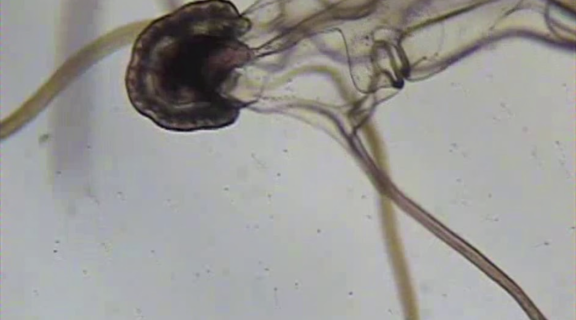
Simulated and natural Marine Heatwaves affect multidimensional trait space of Pisaster ochraceus (Echinodermata: Asteroidea) larvae
Abstract: Marine heatwaves (MHWs) periods of exceptionally warm temperatures are becoming a huge concern in the Pacific Northwest due to devastating consequences on marine invertebrates. They are linked to sea star wasting disease the cause of massive declines in Pisaster ochraceus in the region. This study documents the characteristics of MHWs at Friday Harbor in the Pacific Northwest and assesses their effects on larval morphology. In 2024, sevenMHWs were detected in the San Juan Channel at Friday Harbor; two severe, one strong, and four moderate. Simulated and natural MHWs accelerated development and led to distinct larval morphologies. MHW larvae were longer and wider with longer and narrower stomachs while controls were longer and narrower with rounder stomachs. Seven and 40-day MHWs led to significant morphological heterogeneity in multidimensional space at the end of simulated MHWs and during and after natural MHWs indicating high sensitivity to unstable environmental conditions.
Bio: Sophie George obtained her PhD at the University of Paris in Biological oceanography. She was a postdoctoral fellow at Friday Harbor Laboratories, University of Washington and at Harbor Branch Oceanographic Institution at Fort Pierce, Florida. She taught at Georgia Southern University for over 25 years and spent 6 years as a program director at NSF. She has mentored 95 students including 17 REU students. She is currently investigating the effects of marine heatwaves on the morphology and swimming behavior of several echinoderm larvae including the sea star Pisaster ochraceus. She co-Chair’s the Marine Star Specialist Group, International Union for the Conservation of Nature.

Tags